09/19/2026
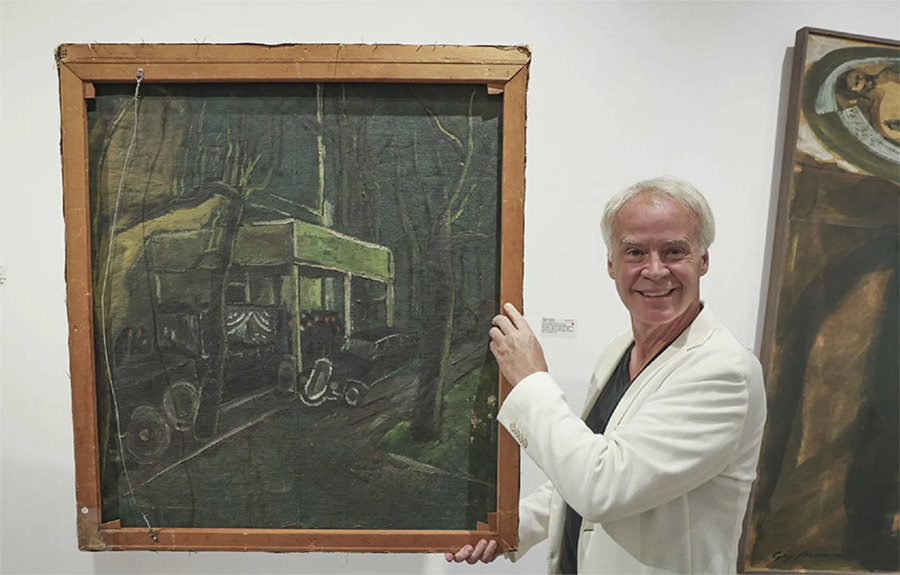
John Braseth, owner of Seattle’s Woodside/Braseth Gallery, poses for a portrait with the back of Morris Graves’ 1936 oil-on-canvas “Colt” painting at the gallery on June 2. (Ivy Ceballo / The Seattle Times
by Gayle Clemans (special to the Seattle Times)
But that wasn’t always the case.
Imagine the early days, in 1961, when Gordon Woodside (1927-2007) rented a modest house on First Hill and transformed it into a gallery, representing a handful of artists who were just hoping to sell a painting or two to pay rent or buy a used car.
And then, 17 years later, when the gallery was still struggling, imagine being greeted by its newest employee, an 18-year-old former dishwasher whose credentials were friendliness and a stellar work ethic.
That 18-year-old is current gallery owner John Braseth, 67, who was hired by Woodside in 1978 and then made a business partner shortly thereafter. The gallery has inhabited five locations and helped establish the careers and legacies of hundreds of artists, surviving more than six decades in a notoriously challenging business.
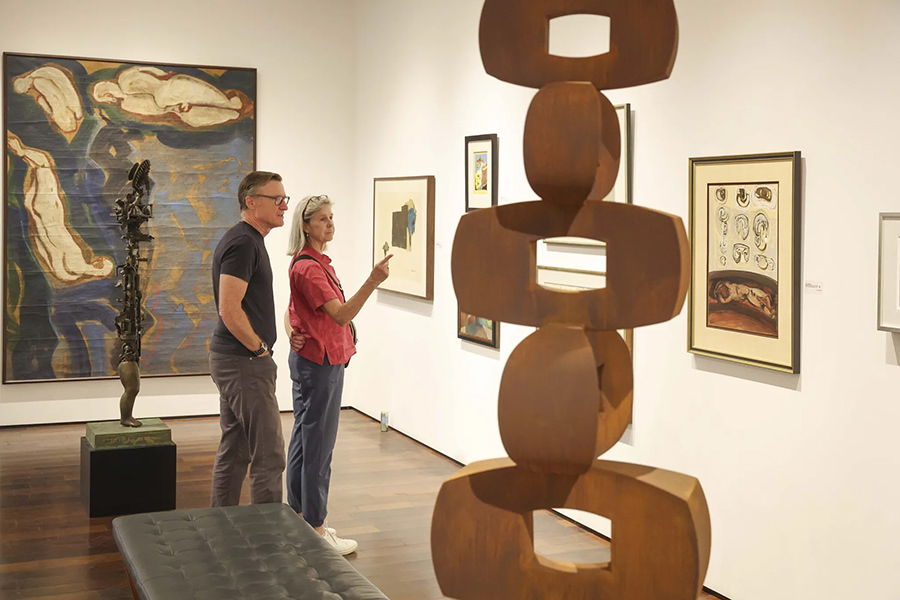
Mike Anderson, left, and Lisa Anderson, right, visit the 65th anniversary “Masters of the Modern Northwest” exhibition at Woodside/Braseth Gallery on June 2. (Ivy Ceballo / The Seattle Times)
Not only is the art market particularly sensitive to economic vagaries, a gallery’s brick-and-mortar business model — with high overhead and dependence on foot traffic — leaves it highly vulnerable to the challenges of e-commerce competition and any threat to walk-in business, such as a pandemic. Even some of the most well-established international galleries have recently cut staff and the number of artists they represent.
But Woodside/Braseth has persevered and thrived, establishing itself as the preeminent dealer for modernist Northwest artists and a trusted source for finding new art. As one of the oldest continuously run galleries in the United States, it is a player on the national and international stage, helping people build collections and museums put together exhibitions.
“I was never quite sure it was going to work, and in some ways it’s not any easier than it was before,” Braseth said, reflecting on what it means for the gallery to be turning 65. “But I love my job. It has been a lot of responsibility and an incredible privilege.”
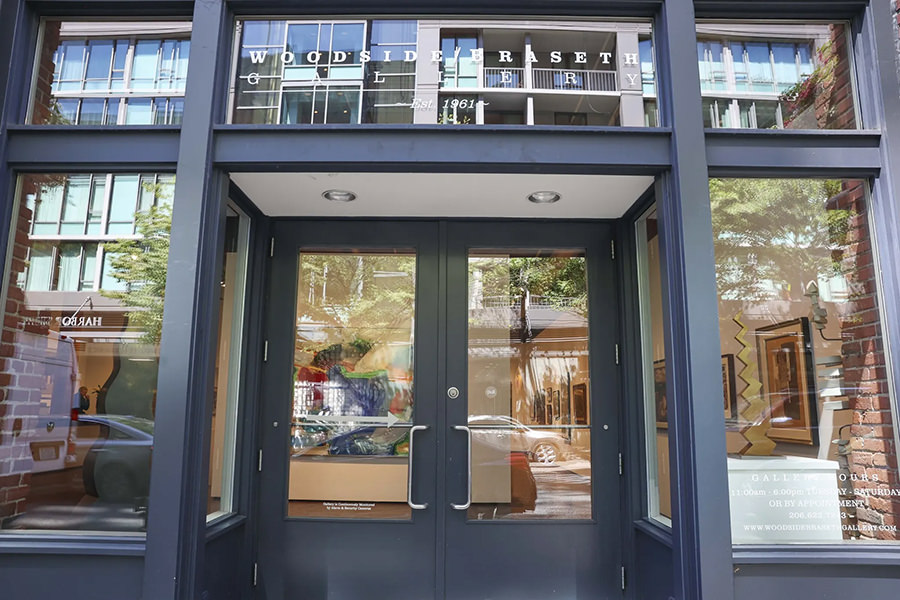
The exterior of Woodside/Braseth Gallery in Seattle. (Ivy Ceballo / The Seattle Times)
In the beginning, Gordon Woodside lived above that first gallery, mounting exhibitions downstairs, full of work that he liked, while his partner, Donald Teichman, made frames in the basement. A notoriously cantankerous and opinionated figure, Woodside wasn’t particularly interested in schmoozing clients and famously refused to sell work to people who didn’t seem to appreciate it.
He did, however, enjoy identifying emerging talent and working with artists such as painter William Cumming (1917-2010), who showed with the gallery since the beginning. Slowly, the gallery began to represent more established artists such as Anderson and Callahan.
Making Braseth a business partner was Woodside’s way to balance out and shore up the business, saying in an interview at the time that Braseth “was always pleasant. He brought in customers. He’s not as abrasive as I am.”
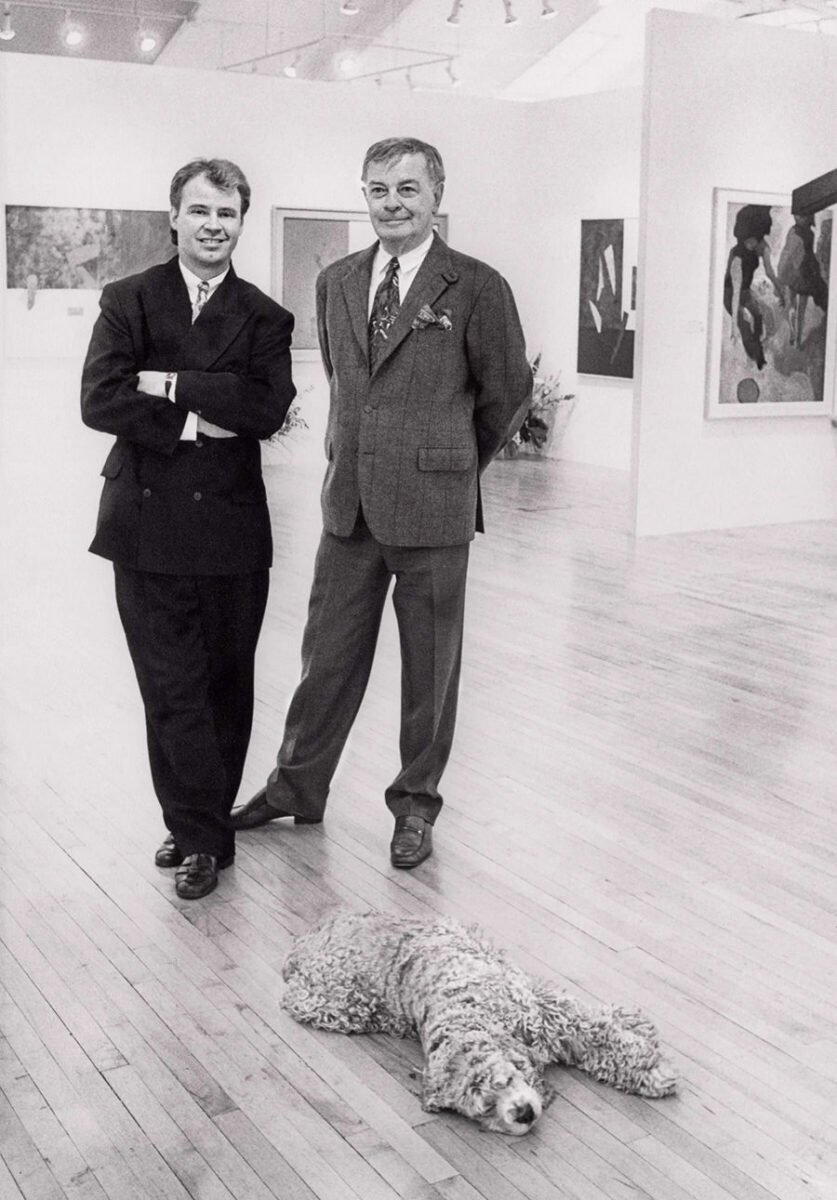
John Braseth, left, and Gordon Woodside at Woodside/Braseth Gallery, then at Ninth Avenue and Pine Street, in 1991. (Greg Gilbert / The Seattle Times)
From there, Braseth took what Woodside began and transformed it into the world-class gallery it is today, steering the gallery through decades of stormy change. During a recent conversation, Braseth’s people skills and deep art knowledge — two key reasons for the success of the gallery — were on full display.
Simply put, Braseth loves art and connecting people with art. He loves marveling at how it was made and talking about the artists or previous owners. Each work of art has a life of its own, and Braseth has stories for every painting, print and sculpture that has passed through his hands.
During a walk-through of the gallery’s anniversary show, “Masters of the Modern Northwest,” Braseth moved easily from work to work, sharing how artists George Tsutakawa and Paul Horiuchi burned pine needles to create black ink and how a collector brought a painting back because he didn’t like horses.
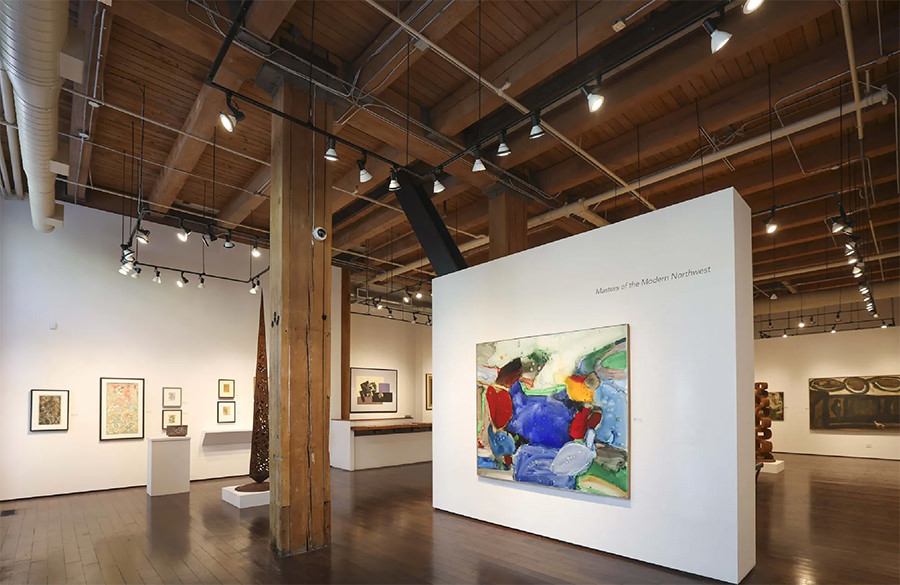
Woodside/Braseth Gallery’s “In Celebration of Our 65th Anniversary: Masters of the Modern Northwest” exhibition runs through Aug. 2. (Ivy Ceballo / The Seattle Times)
He spoke seriously, almost sadly, about the difficulties of maintaining a brick-and-mortar space and the challenges of today’s art market. In years past, “on Saturdays, even before the doors opened, we’d have 20 people gathered to come in. Now, we’re lucky if 20 people come in all day.”
An early adoption of online sales helped mitigate some of the loss of in-person visits, with sales from the gallery’s website now accounting for 20% of revenue.
And Braseth’s face lit up when he talked about the moment people fall in love with a work of art. “When art comes into people’s lives, it changes them,” he said. “The transformation is amazing.”
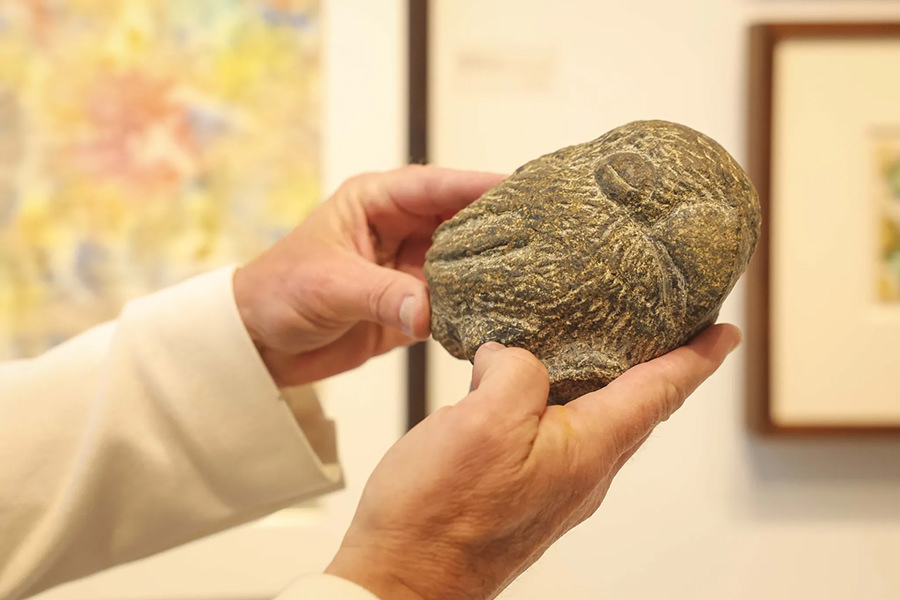
John Braseth, owner of Woodside/Braseth Gallery, shows James W. Washington Jr.’s sculpture, “Golden Eaglet,” at the gallery on June 2. (Ivy Ceballo / The Seattle Times)
Longtime arts patrons Eve and Chap Alvord consider Braseth a close friend, a sentiment repeated by many artists and collectors. Braseth seems to genuinely want the best for the people he works with. Eve stated that not only does Braseth deeply understand what individual buyers like, he is “unfailingly honest.” And so, over the course of 40-plus years, Braseth has helped the couple build a collection of modern and contemporary Northwest art that, according to Eve, will eventually go to museums and colleges, along with works they’ve already gifted.
This is an important dynamic in the art ecosystem that’s often overlooked. Gallerists like Braseth look after the long-term health of collections and the location of individual works of art, helping identify key pieces that can be lent or given to museums, thereby benefiting the public at large.
Braseth, in fact, has helped find and restore long-lost works, including a mural by Cumming and a cache of works by Margaret Tomkins and James FitzGerald, which narrowly escaped a studio fire in 1959. He also regularly donates works of art to museums and nonprofits for exhibition or fundraising.
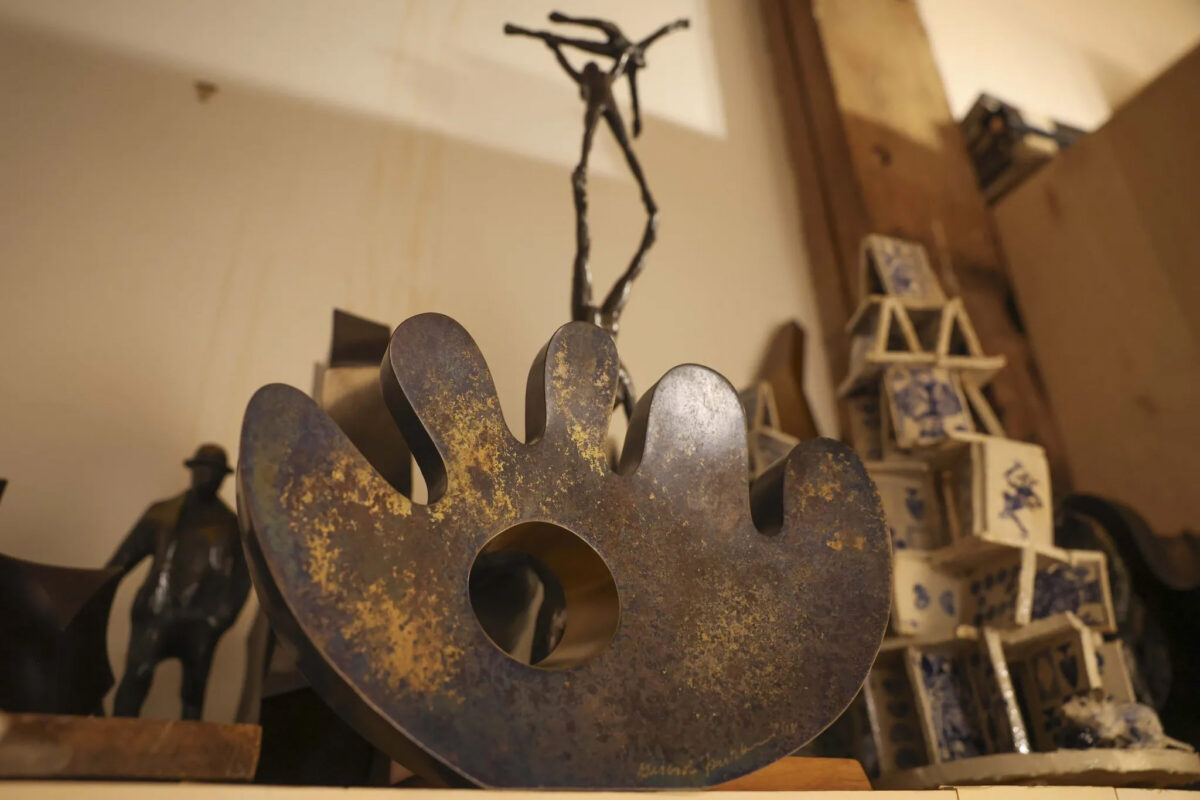
A small-scale sculpture of Gerard Tsutakawa’s “The Mitt” is seen inside the storage room at Woodside/Braseth Gallery on June 2. (Ivy Ceballo / The Seattle Times)
Recently, Braseth contributed his expertise to the big summer exhibition at the Seattle Art Museum: “Beyond Mysticism: The Modern Northwest.” Braseth was “a supportive partner at key moments in the exhibition’s development,” said SAM curator Theresa Papanikolas. “He was generous with introductions to collectors and help securing loans, and he was always at the ready with a really great story. His knowledge of Northwest Modernism reflects his longstanding relationships with its artists, and it is truly an archive of this important period in our region’s art history.”
The exhibition’s title, “Beyond Mysticism,” is a reference to the nickname given to Tobey, Graves, Anderson and Callahan, who were dubbed “mystic painters” in a 1953 Life magazine article due to their moodily expressive landscapes, still lifes and abstractions. As time went on and the reputations of “the big four” and other important Northwest modernists grew, and then long after they died, Woodside/Braseth Gallery remained dedicated to managing the sale of their works, sometimes working with the artists’ descendants to manage the estates.
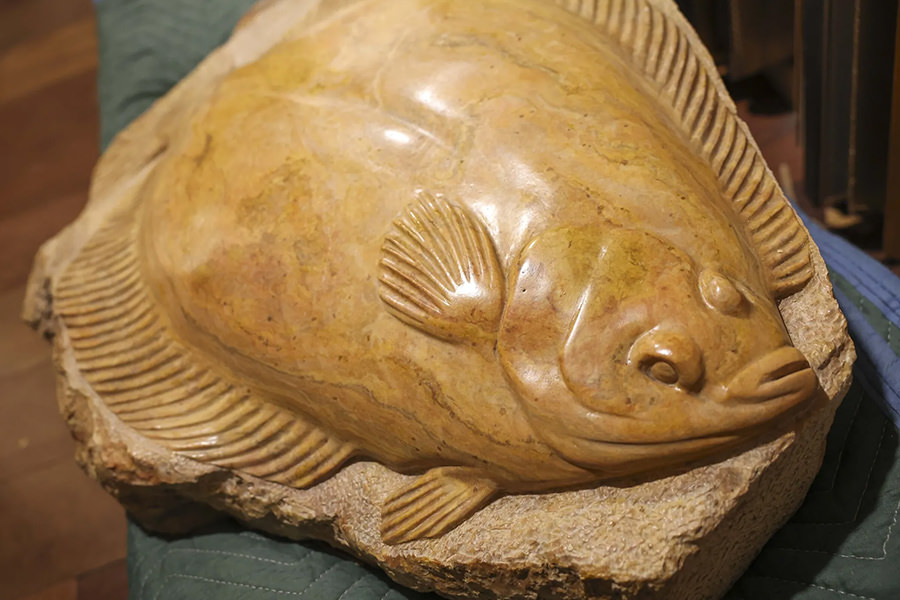
A 150-pound halibut sculpture by Tony Angell at Woodside/Braseth Gallery on June 2. (Ivy Ceballo / The Seattle Times)
Braseth is also committed to supporting the careers of living contemporary artists, tending to find skilled painters or mixed-media artists whose works can hold their own but live comfortably beside the older art. For a younger or emerging artist, being represented by an established gallery like Woodside/Braseth can really make a career.
“The gallery’s remarkable roster of artists, past and present, has lent me a certain shine by association,” said Jared Rue, 54, who signed with the gallery 20 years ago, with his powerful yet delicate landscapes, created with oil, spray paint and metal leaf. “John has always championed my work, even when certain creative twists and turns proved to be less fruitful than others. As an artist, that kind of support means so much.”
Gaylen Hansen, who will turn 105 this year, has certainly seen many changes in the art world over his multidecade career. After his longtime gallerist, Linda Hodges, closed up shop in 2023, several galleries were eager to represent him, but Hansen chose to entrust his vibrant figurative paintings with Woodside/Braseth.
In a recent phone conversation, Hansen pointed out that Braseth is so good at his job because “he knows many collectors, is very good at promoting and knows how to mount an exhibition to make the work look good.” And through all of that, Braseth “creates an atmosphere where the art is respected, and humor is welcome.”
So are those skills the secret to making a gallery last — and thrive — for 65 years?
When asked, Braseth laughed in his typically self-deprecating way and said, “I don’t know.” Reflecting further, he said, “Trust is a big part of it. And you build that one person at a time. Slowly, by listening. And by learning about the art, together.”